For centuries, human progress has been defined by the resources we’ve been able to harness. In the past, it was land that built empires. Later, coal and oil fueled industrial revolutions, powering machines and reshaping economies. Gold and precious metals defined wealth for centuries, serving as the backbone of trade and finance.
But in today’s digital economy, the most valuable resource isn’t something you can hold in your hand or lock away in a vault. It is data—the invisible streams of information generated by every click, every purchase, every medical scan, and every social interaction.
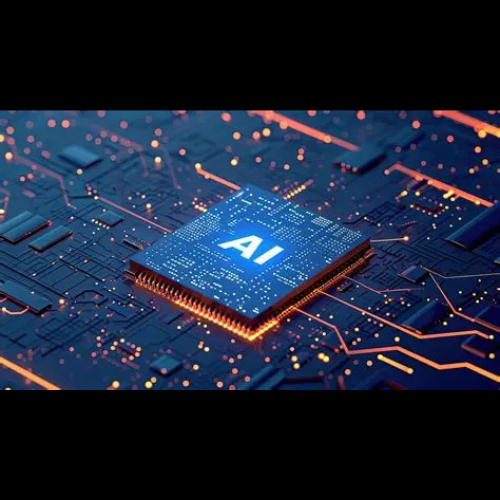
And just like raw gold is worthless without refining, data alone doesn’t hold value until it’s processed, interpreted, and turned into insights. That’s where Artificial Intelligence (AI) comes in. AI is the refinery, the engine that transforms raw data into something powerful: predictions, patterns, and decisions that drive real-world outcomes.
This pairing—data as the resource and AI as the refining tool—is becoming the new gold rush of our time.
The Digital Age Resource Shift
From Tangible to Intangible Wealth
In the 20th century, the richest companies were oil giants like ExxonMobil and Shell. Today, the wealthiest companies are data-centric firms like Apple, Microsoft, Alphabet (Google), Amazon, and Meta. Their dominance doesn’t come from owning land or mines; it comes from their unparalleled ability to collect, organize, and analyze data at scale.
For example:
Google processes over 8.5 billion searches per day, converting human curiosity into insights for advertisers.
Amazon uses purchasing data not just to sell more goods but also to shape logistics, predict demand, and power its cloud computing empire.
Apple has turned its devices into gateways for some of the richest consumer behavior datasets on the planet.
This pivot shows us something profound: data is now the foundation of wealth creation in the modern economy.
Why Data Alone Isn’t Enough
While data is often described as “the new oil,” there’s a flaw in the analogy. Oil has intrinsic energy that can be released when burned. Data, on the other hand, is inert without interpretation.
Think of a hospital with petabytes of MRI scans stored on its servers. Without tools to analyze them, the scans are just digital archives. But with AI, those images can reveal hidden patterns, help diagnose diseases earlier, and even predict patient outcomes.
That’s the difference:
Data is the raw material.
AI is the refinery.
The true value lies not in the data itself but in the intelligence derived from it.
The Gold Rush of Artificial Intelligence
AI has become the picks and shovels of this modern gold rush. Companies that know how to leverage AI are not just surviving—they’re thriving.
In healthcare, AI models can sift through millions of clinical records to identify drug interactions, predict disease outbreaks, or recommend personalized treatments.
In finance, algorithms detect fraud in milliseconds, analyze market trends, and help institutions make smarter investment decisions.
In retail, AI drives recommendation engines, predicting what you want before you even know you want it.
In transportation, autonomous driving systems rely on real-time data from sensors to make split-second decisions.
The scale and speed at which AI processes data have made it indispensable. Just as oil powered cars, planes, and factories, AI now powers innovation across every industry.
Why This Matters for Humanity
Beyond corporate profits, the rise of data and AI is reshaping human life in subtle but profound ways.
Healthcare: Imagine being diagnosed with a life-threatening disease months earlier because an AI spotted something a doctor might have overlooked. For many, this could mean the difference between life and death.
Climate Change: AI systems analyze environmental data to predict extreme weather, optimize renewable energy grids, and track deforestation. These insights can literally help preserve the planet.
Education: Adaptive learning platforms adjust lessons in real time, meeting students where they are instead of forcing them into a one-size-fits-all model.
AI and data, when wielded responsibly, are not just tools of profit—they are lifelines for solving humanity’s most complex problems.
The Ethical Gold Rush
Every gold rush has its darker side. In the 19th century, miners stripped lands, displaced communities, and caused long-term environmental damage. In the data age, the equivalent risks come in the form of:
Privacy Erosion – Our every move online is tracked, raising serious questions about consent and digital autonomy.
Bias and Fairness – AI is only as good as the data it’s trained on. Biased data leads to biased outcomes, reinforcing systemic inequalities.
Concentration of Power – Just a handful of companies control much of the world’s data and AI infrastructure, leading to monopolistic tendencies.
Surveillance Risks – Governments and corporations alike could use AI to monitor populations in ways that challenge basic freedoms.
The challenge for this generation is clear: how do we harness the power of AI and data without repeating the mistakes of past resource booms?
The Human Side of the Story
It’s tempting to talk about AI and data in terms of abstract numbers, market caps, or technological jargon. But at its core, this is a human story.
Consider Maria, a single mother whose child suffers from a rare disease. Traditional clinical trials rarely include patients like her son. But with access to real-world data pooled from hospitals across the world, researchers can uncover treatment pathways that wouldn’t have been possible before. For Maria, data isn’t abstract—it’s hope.
Or think of Raj, a farmer in India. Climate change has made rainfall unpredictable, jeopardizing his livelihood. AI-driven weather prediction systems, powered by satellite data, can give Raj the insight he needs to plant at the right time and maximize yields. For him, data is survival.
These stories remind us that data and AI are not just about algorithms or balance sheets. They’re about people—our health, our environment, our future.
Why AI + Data = Exponential Power
One of the reasons AI and data are compared to gold is their compounding effect. Unlike oil, which diminishes as you burn it, data gets more valuable the more you use it.
Here’s why:
Feedback Loops – Each time AI processes data, it can improve. More data leads to smarter AI, which in turn generates better insights, attracting more users and more data.
Network Effects – The more participants in a data ecosystem, the more powerful it becomes. Think of how Google’s search engine gets better with every query.
Long-Term Value – Historical data becomes more useful when combined with current data. For instance, 10 years of medical imaging can reveal long-term disease trends AI can analyze in seconds.
This exponential dynamic is why some economists argue that data may be more valuable than oil ever was.
Looking Ahead: The Next Decade
If the last decade was about collecting data, the next decade will be about using it intelligently. Several trends point to where things are heading:
Personalized Everything – Medicine, shopping, education, and even entertainment will increasingly be customized through AI-driven insights.
Decentralized Data Ownership – Blockchain and privacy-preserving technologies may give individuals more control over their own data.
AI Democratization – As AI tools become cheaper and more accessible, small companies and even individuals will gain the ability to leverage massive datasets.
Regulatory Frameworks – Governments are beginning to step in, setting guardrails on how data is collected, stored, and monetized.
The nations and companies that strike the right balance—encouraging innovation while protecting citizens—will be the leaders of the new digital economy.
Conclusion: The New Gold Standard
The metaphor of gold isn’t just about value—it’s about trust. For centuries, gold was the standard against which currencies were measured because it was scarce, durable, and universally recognized.
Today, AI and data are becoming the new gold standard of progress. They are scarce when it comes to quality, durable when properly stored, and universally recognized as the drivers of the future economy.
But just as past generations had to learn how to mine responsibly, govern fairly, and share prosperity, our generation must do the same with AI and data.
Handled wisely, they can fuel breakthroughs that make human life longer, healthier, and more fulfilling. Handled recklessly, they risk entrenching inequalities and undermining freedoms.
Either way, one thing is clear: in the 21st century, the true wealth of nations and companies will be measured not by the resources beneath their soil but by the intelligence they can extract from their data.
And that makes AI and data the new gold.
Steve Macalbry