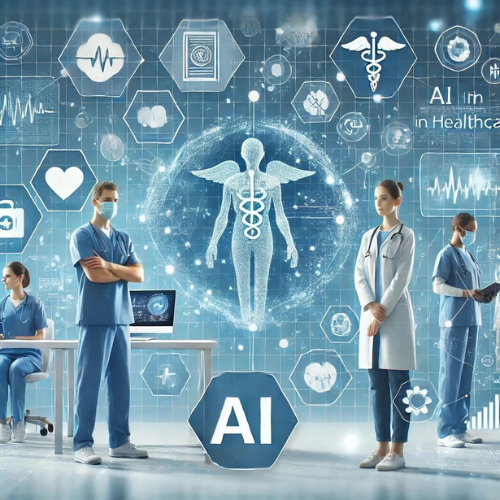
Healthcare is undergoing one of the most profound transformations in its history. For decades, progress in medicine was largely tied to discoveries in biology, chemistry, and clinical science. While those fields remain vital, a new driver of change has emerged: artificial intelligence (AI) and data.
Together, they are redefining how diseases are diagnosed, how treatments are developed, and how patients experience care. What was once a paper-heavy, intuition-driven industry is rapidly evolving into one powered by algorithms, real-world evidence, and predictive insights. If the 20th century belonged to antibiotics and surgical innovation, the 21st century may well belong to data-driven medicine.
From Gut Feeling to Data-Backed Decisions
Traditionally, doctors relied on a mix of training, clinical experience, and patient-reported symptoms to make decisions. While often effective, this approach has limits. Human judgment can be biased, incomplete, or overly reliant on anecdotal experience.
Now, healthcare professionals are increasingly supported by AI systems trained on massive datasets—millions of medical images, lab results, and patient histories. These systems can detect patterns invisible to the human eye. For example:
Radiology: AI models can flag early signs of cancer or cardiovascular disease in imaging scans, sometimes more accurately than specialists.
Pathology: Algorithms can analyze tissue samples at microscopic levels, helping detect rare abnormalities faster.
Clinical decision support: Tools integrated into electronic health records (EHRs) can suggest treatments, flag drug interactions, or predict patient deterioration before it happens.
Instead of replacing physicians, these systems enhance them—turning medical practice into a blend of human empathy and machine precision.
The Rise of Real-World Data and Real-World Evidence
Clinical trials have long been the gold standard for proving whether a treatment works. But they are costly, slow, and often exclude large parts of the population. Only a small percentage of patients ever participate in trials, and those who do may not represent the diversity of real-world patients.
That’s where Real-World Data (RWD) and Real-World Evidence (RWE) enter the scene.
RWD refers to health information collected during routine care—imaging scans, lab results, EHRs, claims data, even wearable device outputs.
RWE is the insight derived from analyzing that data, showing how treatments actually perform in everyday settings.
Regulators like the U.S. FDA and Europe’s EMA now encourage the use of RWE in drug approvals and post-market surveillance. Instead of waiting years for a trial, companies can complement trial data with evidence drawn from millions of real patients.
This shift is powerful. It means therapies can reach patients faster, and decisions are grounded not just in controlled experiments but in the messy, diverse reality of real-world care.
AI as the Engine of Drug Discovery
Drug development has always been a marathon. From initial discovery to final approval, the process can take over a decade and cost billions. Many candidates fail along the way, especially in late-stage trials.
AI promises to accelerate and de-risk this process. Here’s how:
Molecular design: AI can predict how different compounds will interact with biological targets, narrowing down millions of possibilities to a handful of promising candidates.
Patient stratification: By analyzing genetic, clinical, and imaging data, AI can help identify which subgroups of patients are most likely to benefit from a therapy.
Trial optimization: Algorithms can flag optimal trial sites, forecast enrollment challenges, and even suggest adaptive trial designs that save time.
McKinsey estimates AI could unlock $60–110 billion annually in value for pharma and medical-product companies. That’s not just cost savings—it’s faster cures, more targeted treatments, and ultimately, lives saved.
Data Annotation: The Hidden Workhorse
Behind every AI model lies a fundamental truth: algorithms are only as good as the data they’re trained on. And raw healthcare data—especially medical images—is messy, unstructured, and often inconsistent.
This is where data annotation comes in. Annotation means labeling datasets so that machines can learn from them. For example:
A radiologist marking the exact boundaries of a tumor in an MRI.
A cardiologist labeling ECG waveforms that indicate arrhythmias.
A nurse annotating electronic health records to indicate medication changes.
Healthcare data annotation is now a multi-billion-dollar industry in its own right. Unlike generalist data companies, specialized providers with medical expertise are needed to ensure accuracy and regulatory compliance. This work may not grab headlines, but it is foundational. Without high-quality labeled data, AI models can’t function.
Personalized Medicine and Predictive Care
Perhaps the most exciting promise of AI and data is the move toward personalized medicine. Instead of prescribing the same treatment to every patient with a condition, data allows therapies to be tailored to an individual’s genetics, lifestyle, and health history.
For example:
Cancer patients can receive therapies matched to the genetic profile of their tumor.
Patients with chronic conditions like diabetes or heart disease can benefit from predictive models that forecast complications before they occur.
Wearables can stream real-time data, allowing physicians to monitor patients continuously rather than in sporadic office visits.
This shift from reactive to proactive care has the potential to reduce hospitalizations, improve outcomes, and cut costs dramatically.
Challenges on the Road Ahead
Of course, the rise of AI and data in healthcare is not without challenges.
Privacy and ethics: Patient data is deeply sensitive. De-identification and strict governance are essential to maintain trust.
Bias in algorithms: If training data underrepresents certain populations, AI models may perform poorly for those groups, reinforcing health inequities.
Integration with clinical workflows: Tools must be seamlessly embedded into the daily lives of physicians and nurses, not create extra burdens.
Regulatory scrutiny: As AI moves from the lab into patient care, regulators must ensure safety without stifling innovation.
Addressing these challenges requires collaboration among technology companies, healthcare providers, regulators, and patients themselves.
Why Healthcare Stands Apart
AI is being applied across industries—finance, retail, logistics—but healthcare is unique. Lives are at stake. Data is highly regulated. The costs of inefficiency are massive, but so are the rewards of success.
That’s why healthcare AI is projected to be one of the fastest-growing verticals. Unlike other sectors where AI is nice to have, in healthcare it can literally mean the difference between life and death. This urgency is driving unprecedented levels of investment and innovation.
The Human Element
It’s easy to get lost in the jargon of algorithms, datasets, and regulatory-grade evidence. But at the heart of this transformation are real people:
A radiologist whose AI assistant helps catch a tumor that might have been missed.
A cancer patient whose therapy is approved months earlier thanks to real-world evidence.
A diabetic who avoids hospitalization because a predictive model flagged risks early.
AI and data are not replacing human care; they’re empowering it. The future of healthcare is still built on empathy, trust, and the relationship between patient and provider—but now it’s supercharged by technology that makes those relationships more effective.
Looking Ahead: A New Healthcare Paradigm
We are still in the early stages of this transformation. But the trajectory is clear: healthcare is becoming more data-driven, personalized, and predictive.
Hospitals will evolve into digital platforms where patient data flows seamlessly across systems.
Pharma companies will lean on real-world data and AI to bring drugs to market faster.
Patients will become active participants, generating continuous data through wearables, apps, and home diagnostics.
Regulators will increasingly embrace evidence derived from real-world data, reshaping the approval process.
This is not just an incremental change—it is a paradigm shift. AI and data are creating a healthcare system that is smarter, faster, and more human-centered than ever before.
Conclusion
The fusion of AI and data is not just shaping a new era in healthcare—it is redefining what healthcare means. For centuries, medicine was about treating illness once it appeared. In the future, it will be about predicting, preventing, and personalizing care before illness takes hold.
This revolution will not happen overnight. There will be setbacks, debates, and necessary guardrails. But the direction of travel is unmistakable. Healthcare’s new backbone is data, and its new nervous system is AI.
The result is a system that promises not only longer lives but better lives—where technology and humanity work hand in hand to heal.
By Steve Macalbry